Saaremaa by bike: windmills, junipers and a meteorite crater
Estonia's largest island offers cyclists quiet country roads, coastal views, dense juniper meadows, centuries of history, and one of Europe's most accessible ancient meteorite impact sites.
Arriving on the island
Cycling across Saaremaa begins with a short crossing over the Baltic waters. Travelers board a ferry from the mainland harbor of Virtsu to the neighboring island of Muhu, where quiet country roads lead directly toward a paved causeway connecting Muhu with Saaremaa. Saaremaa is Estonia's largest island, recognized for expansive stretches of rural land, coastal breezes, and low-lying terrain that makes long-distance riding accessible to cyclists of all fitness levels. The smooth transition between the islands provides an immediate sense of separation from the mainland pace of life.
Once across the causeway, the landscape opens into broad meadows framed by dense stands of wild junipers and weathered stone fences. The terrain is remarkably flat, allowing riders to maintain a steady pace while enjoying uninterrupted views of open pastures, small timber farmhouses, and grazing cattle. Paved secondary roads and well-maintained gravel paths crisscross the countryside, keeping motor traffic minimal and creating a calm environment for bicycle touring throughout the spring and summer months.
A fortress in Kuressaare
The island's primary settlement, Kuressaare, sits on the southern coast and serves as a natural hub for cyclists exploring the surrounding regions. At the center of the town park stands the Kuressaare episcopal castle, a remarkably preserved late-medieval stone fortress surrounded by a wide water-filled moat and tall earthen ramparts. The fortress was built primarily from local limestone and dolomite, reflecting the geological materials that define the island's natural foundations. Its sturdy towers and fortified walls have anchored the community for centuries, offering visitors an atmospheric glimpse into regional Baltic history.
Bicyclists can easily navigate the compact streets of Kuressaare, where quiet alleys and seaside paths provide a pleasant transition from open-road touring to town exploration. The castle grounds offer paved walking and cycling avenues shaded by mature trees, with open vistas across the neighboring bay. Many riders choose to use the town as a central base for day excursions, looping outward along quiet coastal roads before returning to the harbor area for an evening of rest.
Windmills and cosmic history
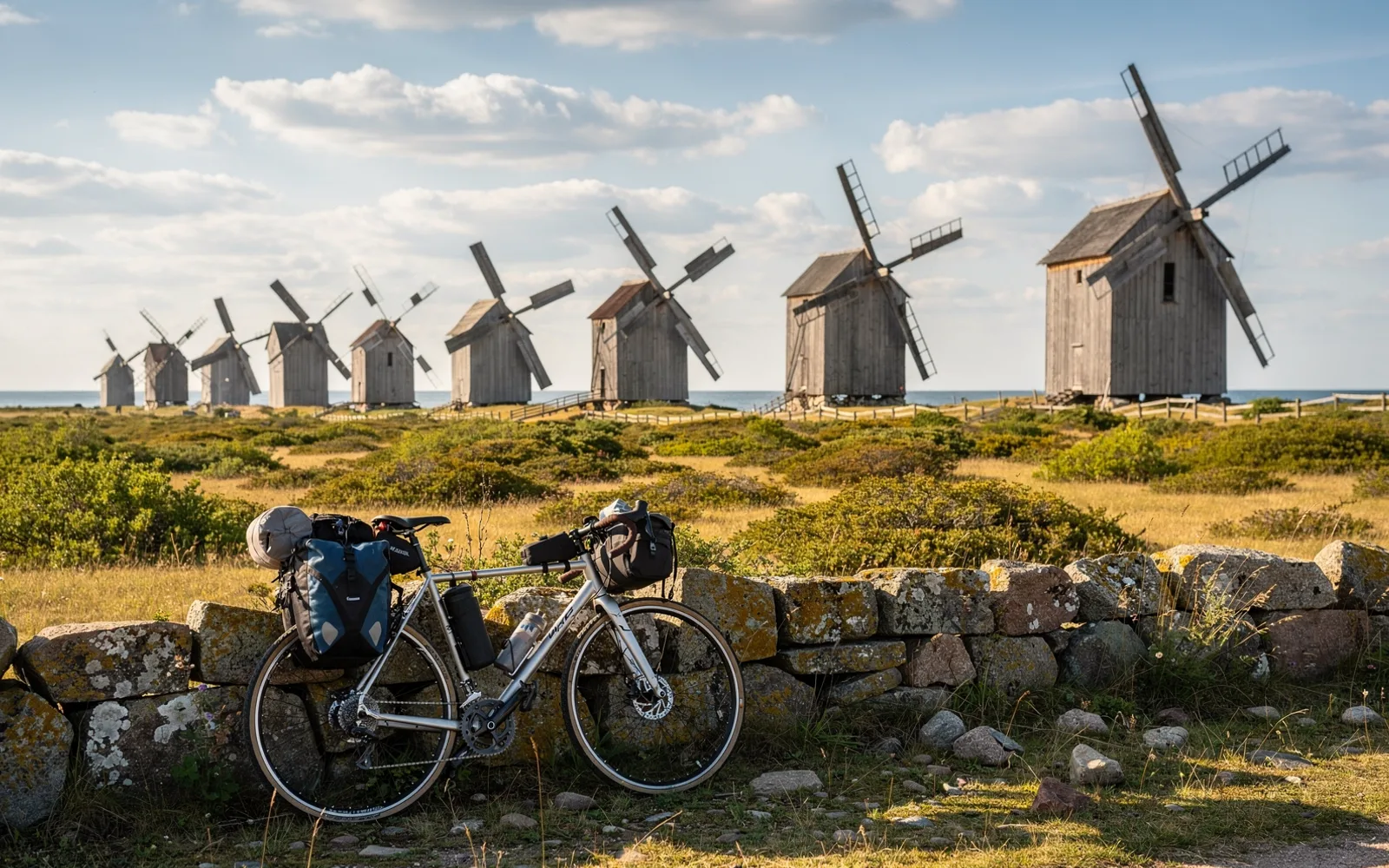
Venturing into the island's interior brings cyclists toward some of its most distinctive cultural and natural landmarks. Angla windmill hill stands along a gentle ridge in the northern countryside, featuring several traditional wooden windmills that once processed grain for nearby farming villages. These historic wooden structures represent both trestle mills and Dutch-style stone-base mills, standing side by side against the sky. They offer a tangible connection to the traditional agrarian lifestyle that defined Saaremaa long before modern transportation connected the island to the outside world.
A short ride south of Angla leads to the Kaali crater field, one of the most remarkable geological sites in northern Europe. The craters were formed by a meteorite impact that occurred several thousand years ago, blasting through the limestone bedrock and scattering debris across the surrounding territory. The main crater measures approximately 110 meters in diameter and holds a circular lake enclosed by a steep, tree-covered earthen rim. It provides travelers with a quiet place to stop, lock their bicycles, and walk beneath tall broadleaf trees around the water's edge.
Coastal cliffs and open horizons
The northern coast of Saaremaa contrasts sharply with the gentle meadows of the interior, featuring dramatic sea views and rugged rock formations. At Panga, sheer dolomite cliffs rise steeply above the waters of the Baltic Sea, creating the highest coastal precipice found anywhere on the island. A well-trodden pathway runs along the cliff edge, where cyclists can dismount to observe nesting seabirds and take in sweeping views across the open sea. The pale stone layers of the cliffs reveal ancient marine deposits that formed hundreds of millions of years ago.
The route along the northern coastline passes through mixed pine woodlands, gravel beaches, and sheltered juniper groves before turning back inland. Because elevation changes remain minimal across the entire island, a multi-day bicycle tour allows visitors to cover substantial distances without intense physical strain or steep climbs. The combination of rural quiet, historical architecture, and unusual geological features makes Saaremaa one of the Baltic region's most rewarding destinations for independent cycling and slow-paced exploration.
Spotted an error? Write to newsroom@nordexanews.com. Corrections are noted at the end of the article. See our editorial standards.