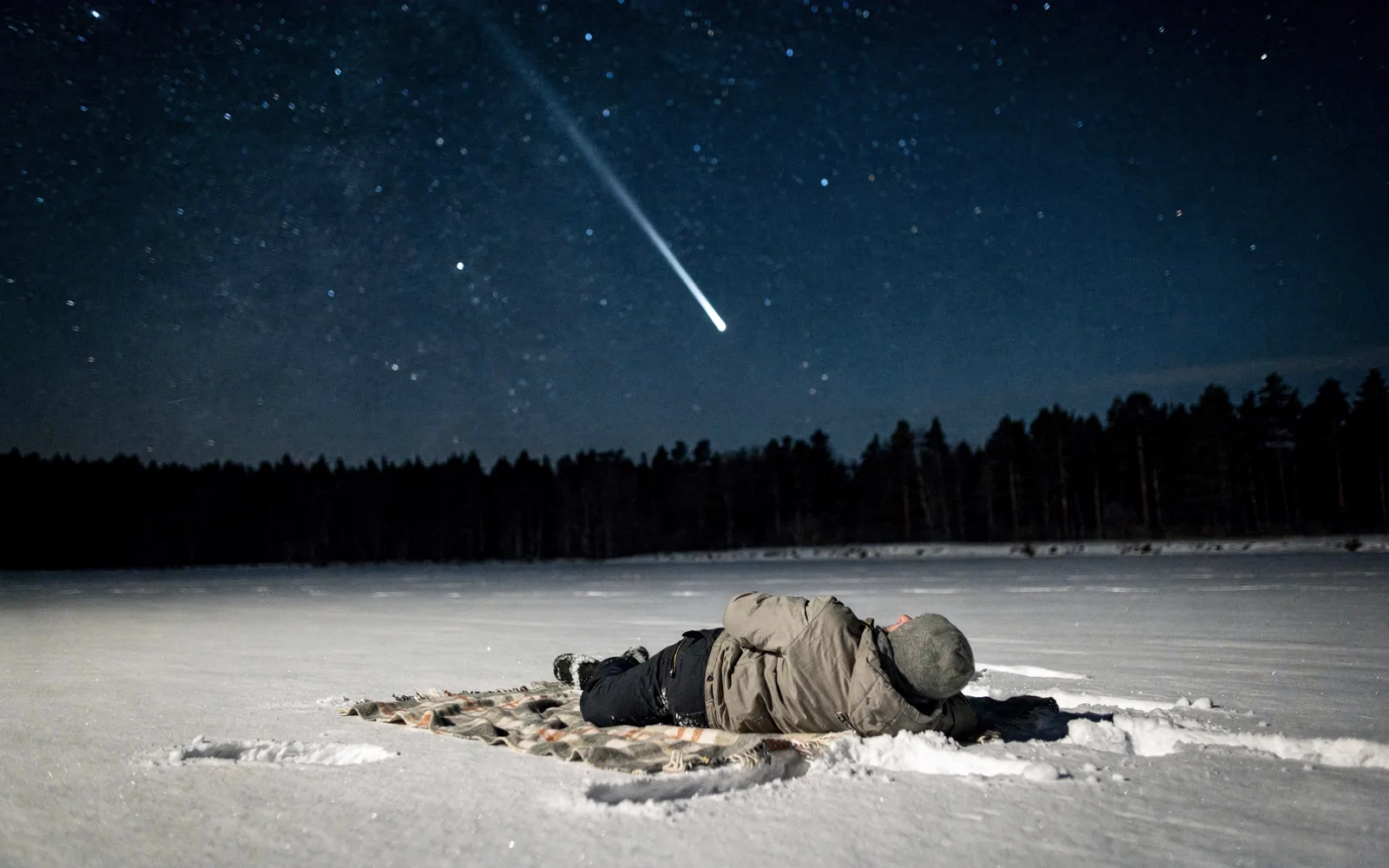
Northern lights over Estonia: what actually helps you see them
Seeing the aurora borealis from Estonia requires a combination of strong solar activity, dark skies, clear weather, and a basic understanding of geomagnetic forecasts.
Estonia and the solar cycle
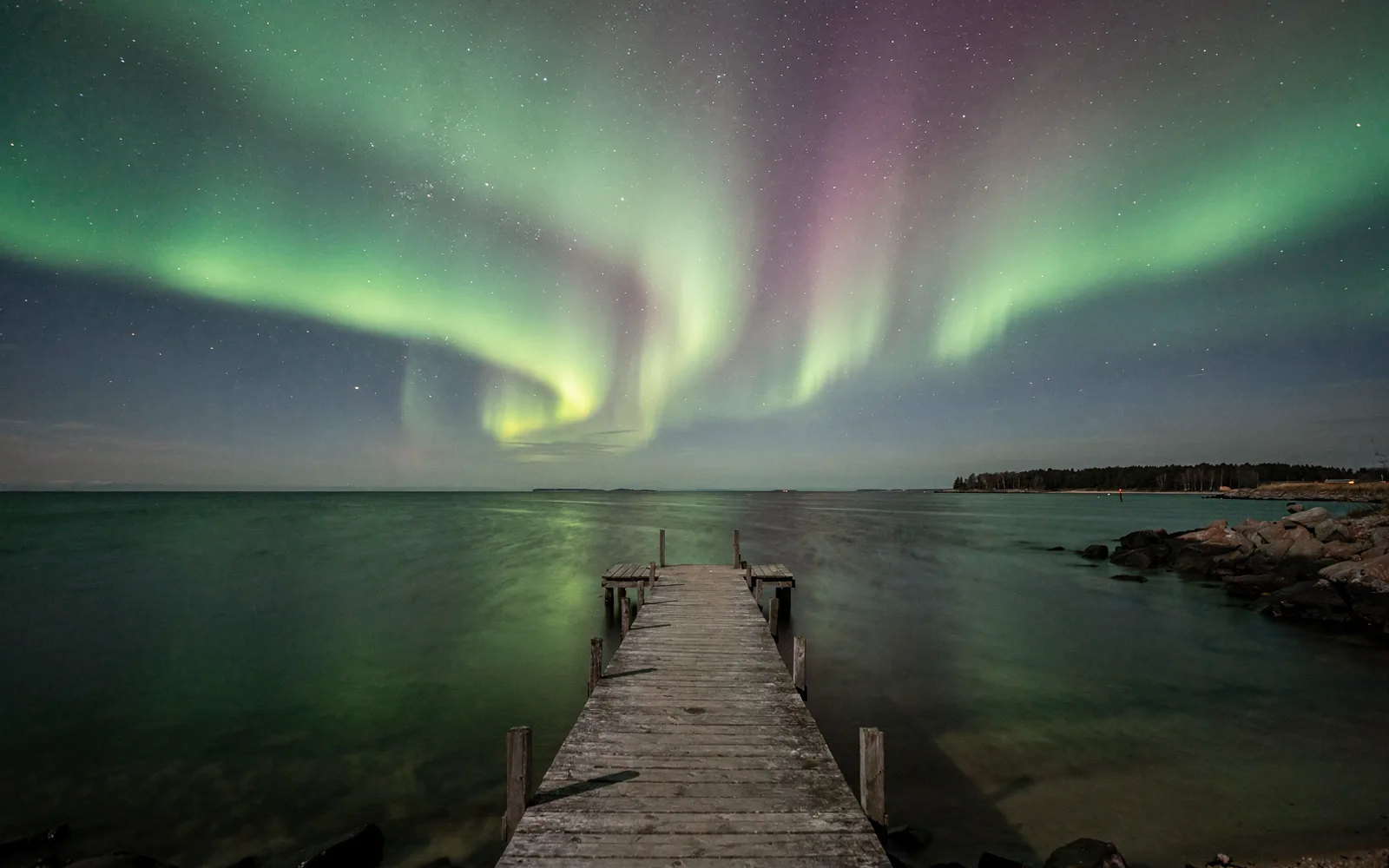
Estonia sits just south of the main auroral zone, which means that the northern lights are not an everyday feature of the night sky. Observers in the country usually witness the aurora borealis only a few times each year, almost always during significant geomagnetic disturbances. When a strong geomagnetic storm disrupts Earth's magnetic field, the oval of auroral activity expands southward from the Arctic circle. This expansion allows sky watchers across northern Europe to view curtains of atmospheric light that are typically confined to far higher latitudes.
The frequency of these displays follows the well-documented rhythm of the sun. Solar activity rises and falls over a cycle that lasts roughly 11 years, shifting between quiet periods and intervals of intense disturbance. Around the mid 2020s, the solar cycle reaches its higher phase, producing an increased number of sunspots, solar flares, and coronal mass ejections. These solar events release vast streams of charged particles into space, significantly raising the chances of energetic collisions in Earth's upper atmosphere over the Baltic region.
Understanding the Kp index
Predicting when these lights will appear requires attention to space weather data rather than simple guesswork. Geomagnetic observatories around the world measure disturbances in Earth's magnetic shield using the planetary Kp index, which is quantified on a scale from zero to nine. A low number reflects calm magnetic conditions, while measurements of five or above denote geomagnetic storm levels. Because space agencies publish these measurements continuously, observers can monitor incoming solar wind streams and plan their viewing sessions around real-time alerts.
For viewers in Estonia, local latitude plays a decisive role in determining what index level is needed. Minor fluctuations with a Kp value of two or three might satisfy observers in northern Scandinavia, but they rarely generate enough energy to be visible over the Gulf of Finland. A geomagnetic storm generally needs to reach a Kp rating of five or six before auroral arcs rise above Estonia's northern horizon. When forecasts indicate severe storms with higher ratings, displays can climb overhead and spread across broad sections of the sky.
Finding darkness and clear skies
Even during an intense geomagnetic storm, viewing success ultimately depends on everyday weather conditions on the ground. Cloud cover remains the single greatest obstacle for stargazers throughout the Nordic and Baltic territories. Autumn and winter bring the darkest skies, but these seasons also produce prolonged stretches of low coastal cloud decks and thick overcast weather. Dedicated aurora chasers regularly cross-reference space weather alerts with satellite imagery and local cloud forecasts to locate pockets of clear sky before heading out into the night.
Finding an appropriate location is just as important as securing clear skies overhead. Artificial illumination from highways, suburban developments, and industrial areas easily overpowers the subtle light emitted by atmospheric gases. Observers must travel away from major urban centers toward dark landscapes such as national parks, open agricultural fields, or northern sea beaches. Choosing a spot with an unobstructed view toward the north ensures that faint bands of light close to the distant horizon remain visible against the dark backdrop.
Sensors and the human eye
Many people heading out for the first time expect to see vivid ribbons of green and violet identical to those in professional photography. In reality, human biology alters how the phenomenon appears in person. Human eyes rely on specialized rod cells in low-light environments, and these cells prioritize sensitivity to contrast over color perception. As a consequence, faint or moderate displays often present themselves to the naked eye as hazy gray pillars or diffuse white clouds shifting slowly among the stars.
Modern smartphone cameras and digital sensors bridge this visual gap by gathering light over extended exposures. Even a basic smartphone night mode held steady for two or three seconds can capture vibrant green oxygen emissions and deep red nitrogen hues that remain invisible to the naked human eye. Testing the horizon with a phone camera can quickly confirm whether a pale glow in the northern sky is genuine auroral light or lingering ground haze.
Spotted an error? Write to newsroom@nordexanews.com. Corrections are noted at the end of the article. See our editorial standards.